I’ve run into a strange question, and it seems like the proceedings might make for a good opportunity for me to refine a description of the incorporation of data into architecture.
I was looking at a particular equation and it occurred to me that many people might not easily grasp the logic of it, which may leave too much room for rumblings about mathematical sleight-of-hand or chicanery. There are often rumors that us alt researchers into ancient mathematics are able to get numbers to “do whatever we want them to”.
Quite the contrary, while some discrepancies between datasets occasionally accommodate an especially broad range of interpretations, ordinarily once we start locking in our speculative values, we are bound to them and no longer have the degree of freedom for the numbers to be whatever anyone wants them to be.
The particular question concerns the Egyptian coffers.
I’ve seen some interesting work by several people in which the proportions of the coffers relative to other things – the whole pyramid, the earth, etc – are experimentally observed, but I’m barely in a position to know what to think with many of the most notable Egyptian coffers still remaining unsolved, in spite of most of them having some surprisingly “pedestrian” components. In a manner of speaking, they seem to half solve themselves before presenting us with the insoluble.
Notably, the coffers in questions have also resisted metrological analysis, which may be part of the problem if we’re supposed to be able to use Petrie’s “Inductive Metrology” to evaluate individual building blocks of a design. That is strange, because after the past six months or so, there don’t really seem to be that many unsolved mysteries left in metrology.
A dozen families of proposed metrological units have able to account for almost virtually every number they have been tested on (a great many, since the families were perfected through actual practice) with the exception of some of the Egyptian Coffers, and the “Best Value” for the Eclipse Year.
Wanting to move forward with Tikal because of a sense of much-needed momentum, I have not yet immersed myself in the mystery of the Nilometer Cubit or its possible connection to the Eclipse Year, but to revisit the question of the coffers at all, it’s easy to become curious if the mystery of the coffers and the mystery of the Nilometer or Eclipse Year couldn’t be one in the same. Do we have one or two mysteries on our hands really?
The mysterious coffer numbers tend toward the range of about 7.48 feet; 7.48 / (Eclipse Year / 100 = 3.4662) = 2.157982805 (perhaps not that far removed from 216/100?); 7.48 x 3.4662 = 25.927176, which isn’t far from the frequently used value for the number years in a precessional cycle, 25920.
I don’t know that either suggestion is correct, but I can guess that some people might look at that and wonder about the logic (or lack thereof) of mincing a figure in days (the Eclipse Year) with a figure in years (the Precessional Cycle).
However, in spatial accounting, we are constantly seeing such “illogical” gestures, and we frequently seem them take place across ratios. We also have our rule that “Constant to constant equals constant” and every reason to expect until proven otherwise that the values we work with whether they represent feet, miles, days, years, or other, do in fact often mince and mingle neatly to form other meaningful data.
With ratios like feet:miles, which is a geodetic modelling scenario rather than a geodetic measuring scenario, we get a very good look the condensation that goes into recording data in architecture; obviously it isn’t practical to reference a figure of “5 miles” literally by making a 5-mile long pyramid so we need some kind of figurative expression such as a fraction of the intended figure or a metrological ratio such as feet:miles even if it doesn’t seem to make sense at first to be mincing feet and miles.
As always, the available space or the proposed size of a structure can be a huge determinant in how a particular number can be expressed by it in practical manner. A lot of that may not make sense without the understanding that they are trying to be able to find a way to incorporate some of the same numbers into every design while at the same time permitting the designs to be whatever scale or shape necessary, by practicing a variety of tricks that permit them to do exactly that.
So, if you’re shopping for a pyramid, it doesn’t have to be a particular size, and it doesn’t need to be terribly fancy – it can send whatever messages you like, as long as it’s well thought out.
Some of these comments might not have lasting value – the difference is interesting between the first version I wrote of the previous post, and the second version I wrote the next day after some new possibilities were realized – but it seems possible for some progress to be made and more observations to be be noted.
The length of Room 1, 32.31162797 may be a clue that the Apsidal cycle of 3233 days is being observed by the architect. The width resembles 3 Royal Cubits but as previously noted the role of the Royal Cubit here is uncertain.
The recurring value of 1.80 m is very near to twice the “Best Lunar Month” value
1.80 m = 29.52755906 / 10; “Best Lunar Month” 29.52390320
The width of Rooms 15 and 16 may be 5.741903085. I have been telling people for some time this number seemed to enjoy some popularity with the Maya. It was first derived from the very earliest Tikal work on the door of Temple II, as I attempted to round out Munck’s discovery of the door having a width of 1 Squared Munck Megalithic Yard with additional data points about the door based on Munck’s source Maler, and George Andrews.
The length/ height ratio of Room 6 maybe (Pi^3) / 10 ft.
The resemblance between the length width ratio of Room 23 (1.783132530) and the height / width ratio of Room 25 may well have been intentional.
The length / width ratio of Room 17 appears to be 1/120 of the Venus Orbital Period, or the Petrie Stonehenge Unit in feet (members of the Hashimi Cubit / Egyptian Royal Foot family).
Sqrt 60 may be present as the length of Room 2-C, and sqrt 15 may be present as the length / width ratio of Room 7.
Perhaps one of the more interesting ideas to emerge so far in starting to pour over the assemblage of data concerns Room 21 and a width given as 6.135170604 is that although 1 / 1.622311470 = 6.164044440 and I am continually saying that 1.622311470 and 1.177245771 are things the ancient architects seem to want to add to every design, there might be something else they could have done.
1 / (1.177245771^3) = 6.129126473.
1.177245771^3 is a Wonder Number in its own right and is able to start an impressive (Pi / 3) series and a probably even more impressive 2 Pi series. That was one of the early discoveries working in earnest with the Tikal pyramid temple doors, and it shed light on more of what the Great Pyramid was capable of geodetically.
Note also the length of Room 14, and the height / width ratios of Rooms 8 and 9. 2 / 1.622311470 is even more powerful that 1.622311470 and we have often found it written as 2 / 1.622311470.
I begin to wonder if someone wanted to make some remarks about 2 / 1.177245771 = 1.698880593 in a comparative context, but that certainly is a way of building 1.177245771 into the design to write it as 2 / 1.177245771 if nothing else.
Finally (for now), the length / width ratio of Room 23 is probably just what it looks like, the reciprocal of 2 Pi.
BTW, if you look at the length / width ratio for Room 15, you’ll see where alternatives to Royal Cubits got into the discussion.
Many of these questions will have to be submitted to the room designs as a whole for clarification, but even just getting to know the data itself reveals some very interesting things.
Encouraged by what I believe may be major successes in the interpretation and understanding of the Bat Palace at Tikal, I decided to take another look at “The Palace With the Vertical Grooves” at Tikal, also known as the “Palace of the Facades With Vertical Grooves” and Structure 5E-58, Group SE-11. George Andrews provides a bit of useful background in his report:
“Structure 5E-58 was first reported by Teobert Maler (1911) who called it The Palace of the Facades with Vertical Grooves. Complex of structures which includes Structure 5E-58 was later called Group G by group from Carnegie Institution of Washington, who visited site in 1930’s. Group G first mapped in detail by Hazard and Carr (1961) and remapped by Orego and Larios, commencing in 1972, who officially designated large group including Structure 5E-58 as Group 5E-11. My data on this building was recorded primarily in 1974 and 1978, with some additions made in 1981...”
It’s a very intimidating subject – consider the years of work that have sometimes gone into determining just the base and height of a particular pyramid, and evaluating the few incidental details like slope length and vertical edge length that arise from the base and height data. The Palace of Vertical Grooves has as many as 28 rooms in it, for most of which we at least have length and width data, and for many of them data on room height, vault height, springline offset and capstone span.
By rights figuring out the Palace of Vertical Grooves is like trying to figure out 36 Egyptian pyramids all at the same time, it is almost inevitably taking on too much at once, and trying to make short work of it may only make things worse.
The Palace With the Vertical Grooves at Tikal, lower level. Plan by George F. Andrews.
Thus, I still don’t have much work on the PVG that I have much confidence in, even after starting into trying to have an overview of the data.
I’d like to call attention to the width of both Room 8 and Room 9, and to the width of both Room 17 and Room 18 – and to the fact that the mysterious measurement of “1.73 m” that permeates the Bat Palace also seems to be seen in the PVG (Rooms 7 and 13).
While there is enough similarity in the widths of rooms in the PVG for many observers to probably want to lump them all together as having been intended to be the same, noting the distribution of specific measures here again reinforces the idea that both the architects who designed it, and Andrews, the architect who gathered the data, were able to easily distinguish between these similar but different measures, just as interpretive efforts also suggest.
The width of Rooms 17 and 18, 1.78 m = 5.839895013 seems to be rather obviously a homage to Venus’ Synodic Period of ~584 days, but some question has arisen which version. Not all that long ago, it was realized that the numbers used here in my models may provide coverage of a variant version of the VSP that can be found in the Dresden Codex, or ~585 days, and it was revealed that a very suitable representation of this variant VSP can be constructed rather directly from the so-called “Real Mayan Annoyance.
If they were observing the Dresden Codex considerations at Tikal, the task of sorting out some of the rooms might have just gotten about 5 times more difficult.
There may be another unusual challenge here to overcome. Rooms 8 and 9 have a reported width of 1.79 m = 5.872703412 ft. This might mean half of 10 Megalithic Feet, or that use of the Dresden approximation may have succeeded in confusing a few measurements so that perhaps this was intended to mean ~585/100 ft to signify an approximation of the slightly oversized Dresden VSP.
However, there is also at least a third possibility.
In previous work on Tikal, the architects have managed to distinguish their skill in use of exponential series by expressing starting or ending points that would likely be unknown to people even like myself, who are apparently still less experienced with the math than the architects seem to have been.
Thus there may be the possibility of 5.872703412 meaning 11.77245771 / 2 = 5.886228855 ft, or of 1/100th of a long VSP of 5.852884656 ft, or of another series starter that is not atypically only one more out in the series that we previously knew was viable: 5.873593918.
This also runs somewhat parallel to another mystery concerning the design of the Palace of the Vertical Grooves, which is whether they might have toned down their emphasis on 1.177245771 (one of those numbers that ancient architects seem to have wanted to build into virtually everything) to make room for one of more other similar numbers they they considered important.
It may not help to arrive at a decisive solution that during the inquiry we learn, or are reminded, that any distinctions to be made may be halfway rhetorical.
What do I mean by all this?
For Room 23, the length would seem to probably be either an emulation (deliberately or unintentional) of Stonehenge’s inner diameter, the question being whether it emulates the inner sarsen circle, or the inner lintel circle. The width appears to be the double figure for some approximation or other of the Draconic Month, and the standard AEMY figure of 2.720174976 for the Megalithic Yard participates in two different schemes that may be viable.
Both of these candidate schemes may be able render the length / height ratio of the room as 1.174718783, which is a previously reported Wonder Number.
However, the distinction between 1.174718783 and 1.177245771 can be somewhat rhetorical, since we are at “Tikal, the Home of Pi / 3” and we learn that (1 / 1.177245771) / ((Pi / 3)^8) = 5.873593914. To become a Wonder Number, 5.873593914 need only show usefulness in its own right, independent of the (Pi / 3) series.
Not only is it able to do that, but it is able to do so dramatically:
5.873593914 x 2 = 1.174718783
What we end up with then is an ongoing competition between no less than three very powerful candidates (possibly four if we include the standard figure for the Venus Synodic Period)and I might have bitten off more than I chew if they’ve involved the Dresden Numbers in the Palace of the Vertical Grooves. Approximation of the Dresden Numbers is a rather recent development, and perhaps it safe to speculate that likely no one has mastered them in a long while unless of all of this is still being handed down more carefully than the world realizes.
There is an even deeper mystery here that has surfaced in the data layout seen above, and one that could have serious ramifications. There are a number of instances here of what look like the Royal Cubit, as both measurement and ratio, yet when I begin to experiment with the datasets, there are indications that some or even all of them may represent something else.
Perhaps I shouldn’t have been telling people that Xkipche was where to go if you want to see heavy usage of the Egyptian Royal Cubit, but a re-examination of Xkipche is beyond the scope of the present work.
What experimentation implies may be afoot is the conflation of Royal Cubits and their simple multiples and fractions, and the reciprocal of one of the numbers involved in the remarkable mathematics atop Tikal Temple I – so much so that it might be good to take a step back and look at how close the Palace of Vertical Grooves may or may not be to the shadows of the pyramid temples.
Carl Munck’s drawing of Tikal Temple I labelled with Maler’s data.
Specifically, 1.5 standard Morton Royal Cubits = 1.718873385 x 1.5 = 2.578310078 ft, which (note the width of the Temple platform on the diagram) 1 / 3.881314681 = 2.576446597 / 10 ft. They both have their reasons for being, and usually it isn’t that hard to choose between them, but if the measures and geometry of the Palace of Vertical Grooves was designed with a novel bent, it may make it harder to tell which we are looking at.
If 2.576446597 were 1.5 of some form of Royal Cubit, the cubit would be 2.576446597 / 1.5 = 1.717631065 ft. I’ve been temped by such a value before, sometimes on geodetic grounds and sometimes on mathematical grounds, but now a new temptation seems to arise – a metrological one.
How easy it might be to solve the mystery of the true historical identity of the Egyptian Mystery Unit (“EMU”) that has stood for 20 years, by hauling off and declaring 1.717631065 to actually be a valid Cubit, which would be the inverse of 1/288th of the “EMU”, and 288 is merely twice 144, which as the square of 12 (12^2 = 144), may be highly involved in the commutation of compatible units.
To make matters worse the difference between that and the Morton Cubit is 1.718873385 / 1.717631065 = 1.000723277, the same ratio that exists between the “long” Royal Cubit and Morton’s: 1.720116610 / 1.718873385 = 1.000723277, out of some geometric necessities arising from using squares and rectangles rather than circles to relate units to each other.
This only adds to the temptation. Was there a related geometric necessity of which we are not yet aware, that resulted in an alternate Royal Cubit? Somehow I am suddenly notquite so sure that this wasn’t the case.
To be honest, we should expect at least some use of Morton’s Cubit in the architectural design because it’s an important astronomical constant.
Clouds of confusion still seem to float over the Palace of Vertical Grooves, yet if we look on the bright side, at least our eyes have been opened to some truly amazing possibilities, and whatever exact decisions the architects ultimately made, they’ve already shown us that extended schemes involving things like the Dresden Approximations may be perfectly viable!
For convenient reference,Andrews’ plan of the Bat Palace again.
Room 3: I was looking more carefully at Room 3 of the Bat Palace last night. I’m intrigued with it because it of its raw ratio between total height (room ht 258 cm + vault height 1.67 m = 4.25 m) and length of 6.76 m.
6.76 / 4.25 = 1.590588235, which resembles the reciprocal of 2 Pi. This is a number (2 Pi) that we are very likely to see – almost as likely as to (Pi / 3) because both of these can be powerful series-forming numbers – then we might have a bit of a “foothold” to help us better understand the rest of the room.
Because there is enough data to try to work out the statistics for the vault of the room, we go about determining the width of the vault itself, which being about 10 cm narrower than the room itself on either side, has a width of 173 – (.10 x 2) = 153 cm.
The capstone span is approximately 27 cm, so in determining the length of the slope of the vault faces, we must find the hypotenuse of a triangle of height 1.67 and base of (153 – 27) / 2 = .63, which is sqrt (63^2 + 167^2) = 178.4880948 cm = 5.855908623 ft.
Notably, the ratio between the total height and the base of the vault slope of 63 is 425 / 63 = 6.7460331746
If we multiply this mysterious figure by 2 Pi, we see an easily recognizable and important series of numbers, which have as their possible root in this 2 Pi series the value of the Incidental Megalithic Yard in ft.
Thus we can define the exact value as 6.745121413 ft and confirm that it is interactive with the Incidental Megalithic Yard value of 2.719256444 (ft) to at least as high as Pi^9 – at least nine important pieces of data “for the price of one”, just by combining these two highly interactive numbers.
As usual, Venus isn’t far away – 6.745121413 / 3 = Venus Orbital Period 224.8373808 / 100, and it should be noted that 6.745121413 has a distinct honor of belonging both to this powerful Pi series, AND to what may well be one of the most powerful (Pi / 3) series ever seen, which was already found at Tikal in the pyramid temples nearby.
167 cm = 5.479002625 itself looks remarkably like 2 / 365.0200808 = 5.497150614, yet it isn’t certain what quality of fodder this makes for (2 Pi).
Things may be a little more certain at the moment with the total height of the room (height of walls + height of vault = 425 cm = 13.94356955 ft, which is probably 13.94274005 ft, especially since not only does it make good “fodder” for 2 Pi, but the series also includes the Faiyum Wonder Number which we had already found in the preceding posts, including that the Faiyum Number is 1/4 of the main recurring value of “1.73” that kept its secret for so long.
Room 12: The 6.42 m = 21.06299213 ft length again looks much like some form of the Palestinian Cubit, while the width 1.73 m is presumably the magic number 5.695197376 ft again. However, we have already defined 5.695197376 as 12 / 2.107038476, so the equation 21.07038476 / 5.695197376 = 21.07038476 / (12 / 2.107038476) = 3.699675940 has come out a bit strange and 3.699675940 is probably something we’d rather not try and accommodate.
When we saw this sort of thing happen in Megalithic architecture, we saw that occasionally the value 57.29577951 / 2.719256444 = 2.107038476 x 10 is substituted with 57.29577951 / 2.720174976 = 2.106326983. This affords inclusion of the C value for the Calendar Round: 4 / 2.106326983 = 18990.40383 / 10^n, whereas 4 / 2.107038476 = 18983.99125, the A value for the Calendar Round.
One or both of these figures may also afford representation to the Lunar Nodal Cycle simply by applying the Pi ratio: 2.107038476 / (Pi^3) = 6795.522396 / 10^n; 2.106326983 / (Pi^3) = 6793.227722 (Nodal Cycle “textbook” value 6793 days).
Thus, the ratio becomes 21.06326983 / 5.695197376 = 3.698426664 = 1/2 Squared Munck Megalithic Yard. This may not be correct, but it is the first equation to surface here to give a sensible and useful ratio.
For the diagonal of Room 12, the raw values would be sqrt (642^2 + 173^2) = 664.9007445 cm = 2.181432889 ft. Numbers like this still are hugely overlooked even though one of them may have replaced the Chephren pyramid perimeter / Mycerinus pyramid perimeter following the relatively recent revision of the Mycerinus model of Munck, based on I.E.S. Edwards, to a model not based on Edward’s possibly questionable data.
The nominations for the Chephren / Mycerinus ratio are 2.180084761 = Pi / 1.441041518, and 2.181661566 (Pi / 144). In the case of the Mycerinus pyramid, it’s difficult to be certain since the “paved/unpaved” status of the Mycerinus, given its present state, is still in question, and the lack of dressing and finishing at the bottom may well make it difficult to sort out. Interestingly, we may have already seen 1.441041518, at least twice in the Bat Palace.
The raw data from George Andrews again. Please note that there is an error for Room 13, whose proportions should read the same as those of Room 14.
Room 5: Previously, it was suggested that the length of Room 5 of 5.98 m = 19.61942257 ft may be 19.62076285, a number already thought to be important to the Maya based on previous work. With a width of 5.695197376 ft, the length width ratio would be 19.62076285 / 5.695197376 = 3.445141854. This would be equal to 2 of the so-called “Stecchini Royal Cubit” , which would be discouraged as an actual measurement and apparently quite rare to find used as one, whereas as a ratio the figure seems more acceptable and understandable because this false alternate Royal Cubit value does have at least a minor role to play in some important calendar equations.
19.62076285 x 5.695197376 = 1.117441171, which is a polar Geodetic Figure, and one which has been found in the Great Pyramid model long ago, and probably also at Tikal before. Polar geodetic figures are heavily associated with Tikal Temple I and with the Venus Orbital Period. Carl Munck had pointed out that of Tikal Temples I-V, only Temple V faces north, and checking for significance between the polar circumference in miles figure and the Venus Orbital Period, some surprising exponential value for the Venus Orbital Period of 224.8373808 was discovered for the first time, making a special connection between Temple V and polar geodesy seem that much more plausible.
Offhand, there may not be that much that would be advantageous about substituting the standard Double Royal Cubit of 1.718873385 x 2 into the “Stecchini Cubit” equation above, so 19.62076285 x 5.695197376 = 1.117441171.
We should want to know more about their interactions with other proposed measures for the building, but it could be starting to look like 19.62076285 x 5.695197376 are the likeliest original length and width measures of Room 5 in the Bat Palace.
How 1.117441171 works as a geodetic number is as such:
1.117441171 x 360 = 402.2788216 = Polar Circumference in Miles 24858.38047 / 10^n
Why it can be said to be build into the Great Pyramid is because 1.117441171 divided by 360 = 31.04003253 / 10^2, 31.04003253 being the half diagonal of the missing apex section of the Great Pyramid.
These equations can also connect the Lunar Year value to the polar proceedings, in another demonstration of the exponential value of the Venus Orbital Period, working here to at least the 3rd power
Rooms 19 and 20: Both of these rooms have a raw data value of 1.78 m = 5.839895013, which we presume to be standard representation of Venus’ Synodic Period of ~584 days, as 584.0321292 (in feet, 480 Remens), and for Room 20, a suspected length / width ratio of sqrt 15.
If so, then sqrt 15 x 5.840321292 = 22.61946711 ft for the length (sqrt 15, which is half of the high power probe sqrt 60, also affords a series here).
This may make Room 20 about as solved as it’s going to get given with the data that we have.
The diagonal could be sqrt (689^2 + 178^2) = 711.6213881 cm = 23.34715840 ft, which is (583.6789601 / 10) x . If this is to be 584.0321292 / 4, we need to double check the accuracy with the adjusted values.
sqrt (5.840321294^2 + 22.61946711^2) = 23.36128517, which is 5.840321292 x 4 exactly.
Rooms 8 and Room 9: These two rooms are also attractive subjects because have data for the heights of these rooms, ideally allowing us to create a more complete picture of the room and the interactions of its parts.
We have just noticed the possible presence in Room of a powerful series based on – of all things – the Incidental Megalithic Yard. Could it be coincidence?
For Room 8, we assume the width of 1.73 m means the same as in other rooms, apparently 5.695197376, and I previously suggested that the estimated length / width ratio of this room of 4.774566474, might likely mean 1/2 of the reciprocal of (Pi / 3) = 4.774648293 another way of writing Pi / 3 to fit a different space that writing it the ordinary way, or in reciprocal form.
If so, then 4.774648293 x 5.695197376 = 27.19265444 — ten Incidental Megalithic Yards!
There seems to be a good deal of crosstalk between rooms like this so that what is going on in one room helps to corroborate what is going in another, which is not all necessarily atypical. Similar patterns have been found in other ancient American architecture – some of this has even been spotted at the still often strange and mysterious Rio Bec site.
For Room 9, the length / width ratio estimate is 8.366141732, which might either be 16.76727943 / 2 = 8.383639715, or perhaps 16.73128806 / 2 = 8.365644028.
While we are looking for some corroborative redundancy, we’re also looking for the originality and diversity that normally seems to go along with it.
8.383639715 not only belongs to a short corroborating series that links to the figures we saw in Room 9, via the recurring width value 5.695197376, but also serves as a showcase that the square of 5.695197376 has valid use!
8.383639715 x 5.695197376 = 4.774648293 8.383639715 x (5.695197376^2) = 27.19265444
Absolutely amazing!
At the same time, 8.383639715 belongs to a longer, different 2 Pi series that provide a small wealth of data different from that provided by 16.73128806 / 2 = 8.365644028 when mingled with the powerful data retrieval tools like 2 Pi and (Pi / 3).
This later series based on 8.383639715 includes the reciprocal of the main Calendar Round value (8.383639715 x 2 Pi) = (1 / 18983.99126 / 10^n). It also includes 10.67438159 / 8, 25 / 1.177245771, 1 / 1.859032007, 1 / Lunar Leap Year, and 5 / Venus Synodic Period.
Postscript: Rooms 5, 6, and 9 all have a length / width ratio resembling 1/100th of the Eclipse Year of ~346.62 days.
I went to look at how compatible the standard figure for the Eclipse Year might be with the proposed interpretation of the recurring room width “1.73 m” now though to be 5.695197376 ft.
346.5939352 x 5.695197376 = 19.73920870 (2 x (Pi^2))
Eclipse Year 346.5939352 x (5.695197376^2) = 112.4186901 = Venus Orbital Period 224.8373808 / 2.
I don’t know if I’ve ever seen seen the number (5.695197376^2) before, and yet here it is that it was probably a prized link between important figures in ancient calendar systems. Imagine the possible unlikelihood of these particular groupings of numbers if the Maya weren’t using them.
In the previous post, we looked at the layout and basic data for the rooms of the Bat Palace at Tikal, and explored the question of this Mayan structure’s mysteriously recurring width measurement of 1.73 m. In my experience, such redundancy in Mayan designs is rare, suggesting the measure recurs because the architect has an important statement, or series of statements, they wish to make about this number.
It was observed that several other measures are recurrent, and recurring in conjunction width 1.73 m is a length of 6.08 m for both Room 4 and Room 10. This length, 6.08 m = 19.94750656 ft, once converted to “modern” feet, was tentatively identified as referring to Jupiter’s Synodic Period of 199.44 x 2 = 398.88 days. It’s yet to be seen whether this suggestion, and the suggested value of 1.73 m = 5.675853018 ft (tentatively identified as 5.695195827 ft), actually fit into the mathematical environment represented by adjacent parts.
Since the recurrence of 6.08 m may be pointing to some important key to understanding that may not necessarily involve itself, let’s see how much a model we can construct from either Room 4 or Room 10, starting with whichever has the most data available for it.
Survey of data points for Room 10 in the form of measurements and extrapolations based on the data from Andrews, which will be commented on below.
~225 cm = 7.381889764 ft. The two most likely things to see here in this range would probably be the so-called Squared Munck Megalithic Yard of 7.396853331 ft, or a simple fraction of the “Best Lunar Month Value”. For us, that’s currently 29.52390320, representing the approximately 29.53 day Lunar Month. 29.52390320 / 4 = 7.380975799.
153 cm = 5.019685039 ft. Frequently a number that looks like this seems to turn out to be half of the Equatorial Circumference “2 Pi Root”.
What this means, is that Earth Circumference in Miles approx. 24901.19742 mi; 24901.19742 / ((2 Pi)^3) = 100.3877283 = 50.193864413. Writing 1.003877283 or 5.0193864413 in a system where we are likely to want to use 2 Pi as a mathematical probe like that, is a way to write the earth’s Equatorial Circumference in Miles.
It’s probably too late for skepticism about that kind of ancient geodetic knowledge after how much I’ve already written on the subject. Leave it for the isolationists who like to think that the ancients were so ignorant and slow-witted that they couldn’t find their way to the Americas even by accident!
Numerous geodetic references like this have already been found, prominently displayed, in Tikal’s Pyramid Temples.
Carl Munck’s diagram of Tikal Temple I showing not only one but in fact two geodetic references in the most basic data, taken directly from Teobert Maler’s works.
The diagonal of the lower part of the room at the end calculates from the data as approximately 283.8203657 cm = 9.311691788. Several possibilities here include 9.315155224 an important if less often mentioned number. If you’ve had the chance to read anything I’ve written about either the Bent Pyramid or the El Castillo pyramid (El Castillo at Chichen Itza rather than El Castillo at Mayapan, although the two readily seem related), you may know this number better in its reciprocal form: 1 / 9.315155224 = 1.073519416 / 10.
The other more dramatic possibility that comes to mind is is 9.295160031. In reciprocal form, this number is our best valid approximation of Saturn’s Orbital Period of 10759.22 days: 1 / 9.295160031 = 10758.28707 / 10^n.
Regarding the top diagonal, the projection suggests this value provides for also allowing the presence of the other of the two primary values for Saturn’s Synodic Period, which seems very similar to what we recently saw concerning the Temple of Hephaestos and the Synodic Period of Mars.
For the capstone span of 27 cm, since this measure is under a foot, we may wish to limit the confidence we invest in projections for this value that do not come directly from suggested mathematical relationships. Even a minute adjustment might change the value of the possible measure used. For the diagonals 632.1336884 cm = 20.73929424 ft (floor diagonal) and 648.2969998 cm = 21.26958661 ft, recognition may not be instantaneous.
Some researchers might be quick to make 20.73929424 into 10 Royal Cubits of 2.073929424 ft rather than our sacred standard Royal Cubit of 1.718873385 ft = 20.62648062, but we will endeavor to not be too hasty in assessing this value.
For instance, 20.73929424 / 12 = 1.728274520, which is not far from the geodetic value 1.729249823, which is not a Cubit value is in fact a value that can be made from both the (long) Indus Foot and the standard Megalithic Foot.
The value is 1.729249823 x 12 = 20.75099787, which multiplied by 12 again equals 20.75099787 x 12 = 24901.19743 = Earth Circumference in Miles / 100. It’s interesting then that we may have found another geodetic reference already, but again we should subject this question to a larger overall design scheme for the room.
648.2969998 cm = 21.26958661 ft. If divide this diagonal by 12 out of almost idle curiosity, we discover that the ratio is nearly equal to the square root of Pi. Since square Pi is not currently a valid figure in this work and never has been, the interpretive speculation may default to what is a typical possibility for anything suggesting the square root of Pi, which would be Lunar Year / 2 / 10^n.
As mathematics, this looks like 21.26958661 / 12 = 1.772465551 = sqrt 3.141634129 vs actual Pi, which is 3.1415926535, whereas approximation of the standard Lunar Year Value (the Lunar calendar year of ~354 days) involves 1.769667289 x 2 x 10^2 = 353.9334578. (The square of 1.769667289 would be valid since it means a valid number times another valid number – in this case, itself – but the square of 1.769667289 has never been known to date to be a useful number).
There then is a cursory look at some possible interpretive options regarding other aspects of the room than examined previously.
At this point, I’d like to take a step back for a moment and have a closer look at our newly nominated Wonder Number 5.695197376, which is actually the already familiar Faiyum Wonder Number times 4. Whereas therefore the Faiyum Wonder number can be seen as 3 / Palestinian Cubit 2.107038476 (ft) = 1.423799344, this Tikal Wonder number can be seen as 12 / Palestinian Cubit 2.017038476 = 5.695197376
At both Giza and Tikal, they seem to have known the difference between Faiyum Wonder Number 1.423799344 and Tikal Wonder Number 1.424280286, and applied both, and each accordingly. Both of these numbers have value to astronomical representation systems.
For instance, in early work at Tikal that it was established that not only should the numbers presented “answer” to (Pi / 3), but Venus being as significant in Mayan cosmology as it was, they should also “answer” to to the Venus Orbital Period, and much has already been written about that including how the mathematics of Temple V at Tikal are able to recite the Polar Circumference in miles through exponential interaction with the primary Venus Orbital Period value, which seems to have been the first encounter with the exponential properties of the standard VOP figure.
This is no different; 5.695197376 / 224.8373808 = 2.533029586. This number is a stepping stone to a version of the Saros Cycle, and is also the fourth root of what may yet prove to be a valid figure for the Full Moon Cycle, and is possibly the cube cube root of another significant astronomy cycle value.
2.533029586^3 = 1.625252292, which may yet prove to have an important linking function between certain forms of the Solar Year, and certain forms of the Venus Orbital Period.
A few additional aliases of the tentative “Bat Palace Number” 5.695197376 discovered within the last 48 hours (correct decimal placement is ignored for convenience during this exercise):
5.695197376 =
–Radian 57.29577951 / Mean Diameter Stonehenge Sarsen Circle 100.6036766 = 360 / (Mean Circumference Sarsen Circle x 2) –(Square root 240) / AE Megalithic Yard 2.720174976 –Two Palestianian Cubits / (AE Megalithic Yard squared) –41.005421111 / 360 ((1 / (2 Pi)) / 3.881314681 = 41.00542113 and thus it is featured in Tikal Temple I; also found in Hadrian’s Library? –Royal Cubit in feet 1.718873385 / Munck Great Pyramid Perimeter 3018.110298 –(1 / Wonder Number 1.021521080) / Royal Cubit in feet –(2 Pi) / (Best Eclipse Year / Pi) –(1 / 129.87878787) / Squared Munck Megalithic Yard –311.6038354 / ((Squared Munck Megalithic Yard)^2) (This number has been reported as occurring in sites from Teobert Maler’s data, i.e. Xkalupococh, and at Stonehenge, with possible additional occurrences of it in the vicinity of Tikal and also at Cahal Pech) –1.622311470 / (1.42428028 x 2) –5 Short Remens / Hashimi Cubit –(1 / 1.5410111111) / (Hasimi Cubit squared)
Note that in the data table, we see an estimated 4.774566474 as the length/width ratio of Room 8. This was overlooked in the previous post, but a plausible suggestion here might be 1 / ((Pi / 3) x 2 = 1 / (2 / 3 Pi). Again bearing in mind how important Pi / 3 has proven to be at Tikal, it doesn’t seem at all unlike to also encounter it in basic variations like such as this nearby.
For the wall diagonal, we have for raw data in relation to the rest of the wall, diagonal 648.2969998 cm = 21.26958661 ft.
648.2969998 / 225 = 2.881319998 – quite easily 2.882083038. While 1 / 2.882083038 = 346.9712659 / 10^n makes for a fairly poor approximation of the 346.62 days in the Eclipse Year (mainly considering that we have better ones), (1 / 2.882083038), it is nonetheless half of quite a good approximation of the Metonic Cycle: 346.9712659 x 2 = 6939.425318 (and yes, that is the prominent version of the Metonic Cycle that is the cube of the reciprocal of 2 Remens).
Perhaps even better, 648.2969998 / 608 = 1.066277960, quite likely to be intended as the Hashimi Cubit value, 1.067438159 (ft).For the floor diagonal, the correesponding ratios are
632.1336884 / 608 = 1.039693566, potentially meaning either 103.9030303 / 100 or 104.0913798 / 100 (103.9030303 = Outer Sarsen Circle Diameter of Stonehenge and 104.0913798 = Outer Lintel Circle diameter of Stonehenge)
Breaking Stonehenge News: Speaking of the Lintel Circle, Glass Jigsaw at GHMB has just given me a fantastic suggestion which has led to the observation that using “my” numbers, the difference in Miles between Equatorial Radius and Polar Radius can be modeled at a Feet:Mile ratio with the Lintel Megalithic Yard (the basic unit of the outer Lintel Circle diameter whereas 2.720174976 is the basic unit of the Outer Sarcen Circle, after Thom.
It had already come up in a conversation with DUNE at GHMB that the Lintel Megalithic Yard value of 2.725195951 ft also serves as the ratio between Earth’s Equatorial Diameter in Miles and the Lunar Diameter in Miles expressed as 2160 (Textbook value = ~2158.8).
I don’t know if was intentional, but it’s rather curious how suggestive 173 / 153 = 1.130718945 is of twice the difference between the Equatorial and Polar circumference values in Feet:
(24901.19742 x 5280) – (24858.38047 x 5280) = 226073.496 = 113036.748.
Valid values that could be used to represent this might include 360 x Pi = 1.130973355 x 10^n and 96 Megalithic Feet / 10^n = 1.177245771 x 96 / 10^n = 1.130155840.
The other floor diagonal ratio of Room 10 of the Bat Palace is 632.1336884 / 173 = 365.3951956 / 100, strongly suggestive of deliberate inclusion of some form of the more or less obligatory Solar Year (actual ~365.25 days, Calendar Year 365 days).
Talking about some of the wondrous mathematical discoveries made at Tikal (that is, working with data from Tikal) tends to make me wistful for the site. One should hope to find more of their splendid “Wonder Numbers” lying about in the architecture. I’m skeptical that we’ve found all of them.
From the data that I have on Tikal, probably the greatest enigma of all is the Bat Palace. George Andrew’s data show us something so rare that it’s really rather extraordinary, which is the repetition of a single measurement room after room, as the width. It tends to look as if someone were really trying to “write the book” on a particular number, which was expressed as approximately 1.73 m = 5.675853018 ft.
It seems to say a great deal for both the ability of the Mayan architects and builders to achieve the same proportions as often as they please, and Andrews’ care in obtaining accurate measures, although admittedly there is a small amount of uncertainty as some reconstruction may have taken place between two visits during which Andrews gathered data.
For some time, I though that the number in question might turn out to be 1.216733603 x (360^3) / 10^n = 5.676792298. That formula gives it a nice “Giza pedigree” and although sometimes obtuse, it really is a nice number with considerable potential for being useful.
However, there may be several things wrong with that proposition.
One is that although it is a nice number, it has yet to be found anywhere else with any certainty, and there’s something that feels a bit wrong about finding it never, and then suddenly it’s raining the number.
More importantly, being built with 360^3 makes it a big number, whereas its role in the architecture is as the smaller of two proportions, since it is found as the width of most of the rooms rather than as their length. It’s of course not impossible that the architect decided it was worth tolerating a lot of “backhanded” numbers from doing what in reality would be dividing a small number by a larger number, but a number that better lends itself to “forward” equations might be preferable if it were possible.
Being long haunted by the problem, from time to time I’ve made an attempt, generally with uncertain results.
This time, I decided to try to keep to as systematic of an approach as I could to try to keep from wandering off in the various directions of different possibilities that may have complicated previous efforts.
I’ve solved very little of it if any, but I may have some fresh and hopefully somewhat more definitive insights from the latest efforts.
Height of rooms are generally not available because of collapse or lack of excavation but are given where available.
Some initial observations — Room 2: Length may be 21.93245423 ft (yes the same number just proposed as a possible component of Wereshnefer’s coffer in the previous post). The length / width ratios of Rooms 7 and 14 are similar and both may refer to 4.559453264 (45 / (Pi^2)). Both of these two numbers turned up working on the exteriors of the Tikal Pyramid Temples. It was while working on that that it was first realized that 21.93245423 was the square root of the height suggested for the Great Pyramid as measured from the base.
Note that these two numbers are reciprocals: 1 / 4.559453264 = 21.93245423 / 100.
Some initial observations — Room 2: Length may be 21.93245423 ft (yes the same number just proposed as a possible component of Wereshnefer’s coffer in the previous post). The length / width ratios of Rooms 7 and 14 are similar and both may refer to 4.559453264 (45 / (Pi^2)). Both of these two numbers turned up working on the exteriors of the Tikal Pyramid Temples. It was while working on that that it was first realized that 21.93245423 was the square root of the height suggested for the Great Pyramid as measured from the base.
Note that these two numbers are reciprocals: 1 / 4.559453264 = 21.93245422 / 100.
Room 5: Length may be 19.62076285. I have mention on a number of occasions that this number seemed to be popular with the ancient Mayan mathematicians. Note the similarity between the length / width ratios of Rooms 1 and 19, which looks rather like a geodetic figure, which is quite reminiscent of the geodetic repertoire exhibited by Tikal’s Temple Pyramids nearby.
Room 12: The raw length value of 21.06299213 ft is apparently equal 10 Palestinian Cubits, most likely the preferred 2.107038476 version.
Room 18 and 19: The width of these two rooms most likely refers to the Venus Synodic Period, most effectively represented as 584.0321292. The length / width ratios of Rooms 5, 6 and 9 all resemble 1/100th of the Eclipse Year at standard ratio of feet to days.
The 3.870786517 length / width ratio of Room 20 greatly resembles the square root of 15 (3.872983346); the 25.82020997 ft length of Room 7 may be the reciprocal of this figure (1 / sqrt 15 = 25.81988897 / 10^n). This is a way to include sqrt 60, the most powerful mathematical probe ever discovered (sqrt 15 x 2 = sqrt 60), another number that ancient architects seem understandably eager to include in every structure as much as humanly possible, including Megalithic monuments like Stonehenge.
It’s interesting that for as much insistence on diversity in the length measures of the rooms seems to be on display, that the data gives Room 4 and 10 a shared length, which may be an important clue.
The length looks like 1/10th of 1/2 of the Jupiter Synodic Period (JSP 398.88 days / 2 = 199.44); the two most likely approximations in use would be 399.1413901 (19.95706951 x 20) and 399.4300799 (19.97150400 x 20).
The length / width ratio of these two rooms 3.514450867 may be one of at least several things; 3.511730792 (1/50th of the perimeter of the Great Pyramid’s missing apex section). 3.510544974 = 5 / 1.424280286, 1.424280286 being another of the original “Wonder Numbers” from Tikal (1.676727941 / 1.177245771 = 1.424280286 which was later also found at both Giza and Stonehenge.
Upon closer examination, 5.682972205 may be the most likely candidate; however, although it forms an interesting series with (Pi / 3) that shows effectiveness at up to (Pi / 3)^9, the same may not necessarily be said of its interactions with 2 Pi.
To attempt to make a long story shorter, further exploration revealed another possibility, 3.504193730 (Indus Foot in “modern” feet / Pi) x 10. Paired with 19.95706951, it generates a room width of 19.95706951 / 3.504193730 = 5.695195827 (19.97150400 / 3.504193730 = 5.699315031).
Of these six different possibilities, 19.95706951 / 3.504193730 = 5.695195827 would seem to be the likeliest candidate. It manages to somehow embody the best of the first four possibilities (2 / 5.695195827 = 3.511730792), while being more responsive to 2 Pi as well as to (Pi / 3). For that, 5.695195827 may well be the most deserving of the six for being described as a new “Wonder Number”, since series-forming ability in the presence of classic probes such as 2 Pi and (Pi / 3) is the most important characteristic that earns numbers this title.
Something surprising is that this arrangement also manages to embody the spirit of the “Faiyum Wonder Number ” from Egypt. The Palestinian Cubit may have been used in the design partly because it can help reveal this fact (and partly because it embodies the Half Venus Cycle aka Calendar Round).
5.695195827 / 4 = 1.423798818, the Faiyum Wonder Number.
A great deal more work needs to be done here, but now that more of the properties of 5.695195827 have finally been revealed, it may now actually be possible to move forward with a more viable candidate for a change.
Using the reciprocal of 5.695195827 with (Pi / 3) finds, among other things, the 1.676727943 “Egyptian Mystery Unit” value that is used in the construction of 1.676727941 / 1.177245771 = 1.424280286. The reciprocal of 5.695195827 is the perimeter of the Great Pyramid’s missing apex section / 10^n. 5.695195827 may also embody the best value for the Eclipse Year when Pi is used to retrieve it.
Could it be true? Could the most vital piece by far of the design of the Bat Palace have finally fallen into place?
In the previous post, we took a first look at the 30th Egyptian Dynasty coffer of Wereshnefer, courtesy of photographs and data from the Metropolitian Museum, including pixel measurements I took of one the photos of the coffer lid in hopes of being able to extrapolate further data from the width and height provided.
Coffer of Wereshnefer, courtesy of the Metropolitan Museum, as seen in the previous post.“Dimensions: Box: L. 292 × W. at foot end 155 cm (9 ft. 6 15/16 in. × 61 in.); Lid: L. 292 × W. at foot end 155 × H. at foot end 81 cm (9 ft. 6 15/16 in. × 61 in. × 31 7/8 in.); Total H.: 211 cm (83 1/16 in.)”
In the previous post, we saw what may be our first mathematical and metrological discovery, apparently involving the Hashimi Cubit (a form of the Egyptian Royal Foot).
“Something I found especially interesting so far is that for Wereshnefer’s coffer, the total height is given as 211 cm while the height at the foot end is given as 81 cm. It should be then given the data that the total height of just the coffer should be 211 – 81 = 130 cm.
211 cm = 6.922572178 ft, 81 cm = 2.657480315 ft, 130 cm = 4.265091864 ft
Does 6.922572178 remind anyone else just a bit of the Metonic Cycle of 6939.688?
81 cm = 2.657480315 ft; 10.67438159 / 4 = 2.668595398 ft = 81.3388 cm; 130 cm = 4.265091864 ft; 1.067438159 x 4 = 4.269752636 ft = 130.142 cm.
4.269752636 + 2.668595398 = 6.938348034 = 6939.688 / 1000 = 6.939688 to an accuracy of .9998.”
The coffer lid may nor may not have some slight, deliberate irregularities in its design; for now we will assume either the final design or the initial design were regular and symmetrical, just as we might with a pyramid or other structures, and begin by treating it accordingly.
Measures of the coffer lid extrapolated from the photograph and data from the Metropolitan Museum.
To be honest, I’m not 100% sure of the assessment of the total height that was seen in the previous post. On the one hand, it seems very much in accordance with observations that have followed, but the emerging picture may be one of a particularly ambitious collection of astronomical references though measurement that may make it more difficult to feel certain about a particular parameter.
Even with as little of the data for the coffer overall as the projections actually contain, some very interesting things may become apparent.
The very first thing I should report is that from the raw data, we get the ratio 2.657480315 / 2.185537025 = 1.215939279, looking very much like yet another typical case of finding the value of the Remen in Imperial Feet, as a ratio (proportion) rather than as a measurement. Ratios withstand metrology; it will be proportioned this way regardless of any particular units of measurement that are applied.
The next thing I want to point out is 1.635925241. My first guess is that this may be 1.631553867, which would be the value of the Megalithic Foot that I work with in “modern” feet, cubed — 1.177245771^3 = 1.631553867.
It’s fairly rare that we see this remarkable number and I think that’s because it makes a poor multiple or divisor. In that sense we would prefer to use 1.177245771^1 so we get all the data out, whereas cubing the figure first is going to miss 2/3 of it. 1.177245771^3 = 1.631553867 is less a useful multiplier or divisor and more like “fodder” for more useful multipliers and divisors like (Pi / 3) or what have you (1.631553867 is a root for a truly amazing (Pi / 3) series), as I learned early on working at Tikal though the available data.
So far, experience suggests we might only see 1.631553867 wherein there is a specific point to emphasize about its role connecting particular important figures, or where it’s serving as fodder, or both.
This brings up what might be an important point, because one thing the 2.185537025 that seems to appear three times in the diagram might represent other than the Talmudist Cubit it so much resembles, is a decimal fraction of the square root of the height of the Great Pyramid as measured from the base.
sqrt 481.0335483 ft = 21.93245423
This is one of many reasons that particular interpretation of the Great Pyramid’s height was decided upon, that it can be conveniently represented though its square root in a valid fashion.
If the correct measure for the raw extrapolated value of “2.185537025 ft” is 2.193245423 ft, then the total measure across the three parts of the beveled top is presumably 2.193245423 x 3 = 6.579736268, which may not only be a valid and intended representation of the Saros Cycle of 6585.3211 days / 10^n, but it may also be something that can call data forth from the “fodder”.
My sets of approximations for the Saros Cycle are still experimental, but the projections already show me that if we take 6579.736294 as the “A” value, the improved accuracy version 6584.495251 will be the “B” value, and these may indeed be the best nominations for the A and B values, which generally tend to be the most important versions.
Thus it may be quite possible that we see something like this, with these two major Lunar Cycles, the Saros Cycle and Metonic Cycle, readily displayed side by side.
I’ll repeat this diagram here in hopes it helps keep people from having to keep scrolling back up to it, because there are some more things to point out. We may wish to note that for the diagram above showing the possible modeling of two Lunar cycles, this could be only where the Lunar references begin, rather than where they end.
For the mean height of the bottom section of the lid, note that we have 1.021527894 for raw data, which is a bit uncanny, since the number 1.021521078 is one of the original “Mayan Wonder Numbers” from Tikal, which was later found to also be “hiding” (it wasn’t really hiding) in my model of the Great Pyramid. (Some of course may still be eager to try to make something more like 1.031324031 — .6 Royal Cubits — out of this measurement, but seeking maximum exactitude may eventually demand otherwise).
It gives us something to think about because I might have misread the metrology regarding the height – maybe they weren’t using the Hashimi Cubit quite so redundantly? – so we are reminded that this is still just a scouting mission, there’s no need to name or claim the territory just yet, we only need to be having a look around for now. At any rate, even if we take out one of the possible redundant uses of the Hashimi Cubit, we may still be able to get a total height that registers as a valid figure for the Metonic Cycle, thus preserving the model suggested in the small diagram.
The value of 5.085301837 is very much reminiscent of 1/2 of an important and increasingly familiar figure: (5.085701734 x 2) / 10 = 1.0171409347 = 360 / Lunar Year. This “backhanded” way of writing the Lunar Year, which is rather similar to the “backhanded” way of writing the Half Venus Cycle, with both of them having us diving 360 by “x”, seems to have been rather favored by the ancients, not only in Egypt but particularly in the ancient Americas.
Michael Morton may have the first claim on publishing 5.085701734; there may still be some informative equations of his on the Internet regarding this figure in association with a “geomathematical” interpretation of a “Baphomet” (i.e, it resembled a goat) monument of some kind, which Michael used to refer to as “Baphy”.
At any rate, I’m doing my best to try to stick to exploring the suggestion of 1.177245771^3 = 1.631553867 for now, partly because as I say on a regular basis that two of the numbers that ancient architects and designers seem to have been most eager to incorporate into virtually everything are 1.177245771 and 1.622311470. (The Pyramid of Niches in Mexico remains a memorable example of this, even out of a great many examples). Incorporating 1.177245771 via its cube 1.177245771^3 is one way of making sure its there somehow.
We may want to note that the ratio between the raw figures of 2.657480315 and 1.177245771^3 = 1.631553867 is 2.657480315 / 1.631553867 = 1.628803295 (raw data 2.657480315 / 1.635925241 = 1.624450952), could be the probably obligatory reference to 1.622311470 that we might be expecting.
This is one place where things may still be bit tricky; if we are looking at 1.177245771^3 = 1.631553867 and 1.622311470, 1.631553867 x 1.622311470 = 2.646888553 may be the true intended total height. This is the reciprocal of the standard Saturn Synodic Period of ~378.09 days: 1 / 2.646888553 = 377.8020797 / 10^n = 1/800th of the Great Pyramid’s base perimeter as measured from the base, but there is also the possibility of a reference to the Jupiter Orbital Period trying to crowd its way into the picture as well, and it remains to be seen what is the most harmonious interpretation of all this.
Specifically, the possible reference to Jupiter’s Orbital Period that may have been detected is Total Height of Lid 2.657480315 (ft) x Upper Height of Lid 1.631553867 (ft) = 4.335822284 = ~Jupiter Orbital Period 4332.59 / 1000.
Are there any notable justifications for the grouping together of some of these numbers as we might hope? That question is still being researched, however we might note that the possible display being suggested here includes an advisory that 1.666666666 / 1.631553867 = 1.021521078, which is actually a much better way to remember the “Mayan Wonder Number” 1.021521078 than I am currently using.
If the height across the top is really (sqrt 481.0335483 ft = 21.93245423) / 10, then 1.631553867 / 2.193245423 = 27.94546570 / 100. 27.94546570 ft is the projected height of the Great Pyramid’s missing section, so this combination ushers in some of the most important data found at the top of the Great Pyramid. Seen from this angle, it’s as if the designers of Egypt’s 30th Dynasty were still paying homage to the splendid mathematical achievement that the 4th Dynasty pyramid attributed to Cheops (Khufu). (This may well imply that 1.177245771^3 is also contained in the Great Pyramid).
The length of the coffer and/or lid is also proving to be somewhat enigmatic at first glance; 292 cm = 9.580052493, which isn’t that far from 9.606943459 ft = 9 Hashimi Cubits of 1.067438159 ft, but there may be a number of other possibilities as well, including
Combining the Saturn Synodic Period with 1.177245771^3 can also generate the standard value for the polar circumference in miles via the square of 1.177245771^3.
There may also be some reference to another member of the same classic Tikal (Pi / 3) series that contains 1.021521078, namely 1.069734371. A striking thing about this truly incredible series is that we can create it from half of the standard Venus Orbital Period and (Pi / 3):
Venus Orbital Period 224.8373808 / 2 = 112.4186904; 112.4186904 / ((Pi / 3)^3) = (1 / 1.021521078) x 10^n; 112.4186904 / ((Pi / 3)^4) = (1 / 1.069734371) x 10^n.
These important considerations then may be casting an alternative vote that 292 cm = 9.580052493 ft may actually be intended to mean the reciprocal of (Pi / 3)
1 / (Pi / 3) = 9.549296586 / 10^n.
That is still a lot to think about.
I did mention that there may be more to the lunar references than just the possible occurrences of Saros Cycle written across the three parts of the beveled top and the Metonic Cycle written with the height, in addition to the possible reference to 360 / Lunar Year that may be represented by the width of the lid.
So far it seems unusual to readily pick up traces of the Apsidal Cycle; one notable place we found it is in Mexico at Oxkintok where they literally seem to have been specialists in this number – they don’t just mention it, they seem to have a lot to say about it there.
Already, however, possible traces of the Apsidal Cycle have been detected in the coffer of Wereshnefer. A possible reference to the Tropical Month has also been found. In asking someone might group these two numbers together as if emphatically, it appears as if a functional approximation linking the two might be (12 x (Pi^2)) x 10, the very same critical link used to connect the Venus Orbital Period to the Half Venus Cycle (aka Calendar Round).
In regard to the possible bundling of these Lunar numbers with the Saturn Synodic Period, Apsidal Cycle 3233 days / Saturn Orbital Period 378.09 days = 1.068859266 = ~1.069734371 x 8.
How this quite possibly under-appreciated number 1.069734371 first entered the discussion here, is comparing the Sothic Cycle to the Tropical Month: 1460 / 27.3 = 106.9537070 / 2.
Allow me to demonstrate what else the Apsidal Cycle may be doing in the discussion:
Possible Center Width of Coffer Lid 2.193245423 ft, cubed / Possible Upper Height of Coffer Lid = (2.193245423^3) / 1.177245771^3 = 6.466365938 = 3233.182969 / 500.
Suggested Width of Coffer Lid 5.085701734 ft, squared and divided by 4 = (5.085701734^2) / 4 = 6.466090532 = 3233.045266 / 500 = 1.177245771^3 / 1 Pole (unit of measurement = 1.5 Indus Feet)
The figure of 1.449882405 ft I probably haven’t much insight into yet. It’s quite similar to the value of the Earth’s circumference at a ratio of miles to Royal Cubits (24901.19742 / 1.718873385 = 1.448692943 x 10^n), but it’s still hard to be certain of that at all, although we also see potential geodetic modelling value where the value of the Pole in inches can be seen as being equal to the Equatorial Circumference in miles / 4 Pi.
At present, I am resting no faith whatsoever in such speculations on my part, but in a attempt to explain why Thoth might be associated with both the Moon and with Saturn, and perhaps the Apis bull as well, I posted the following images to GHMB based on comments that were make by R.H. Wilkinson, in response to one of engbren‘s scholarly threads about whether Saturn was an influence in the design of the pyramids.
I am including it here as part of this discussion because
a) The cycles of both Saturn and the Moon may be represented boldly in the mathematics of Wereshnefer’s coffer
b) Wereshnefer’s coffer is said to come from Saqqara
c) Saqqara is also the location of the Serpaeum where the idea of the Apis bull “cult” predimonates
c) the Serapeum contains coffers (the “Serapeum boxes“) which have similarly beveled tops
I will leave it at that for now because again, there is much to consider, but even with an incomplete dataset for Wereshnefer’s coffer, it very clearly has great potential to be at least as royal mathematically as it is aesthetically.
Postscript (Next day): There may be a few other possibilities that we might not want to miss out on. Whether or not the scheme of Wereshnefer’s cooffer can accommodate it, technically
Interestingly – but perhaps misleadingly? – the data gives us the length of the artifact as 292 cm = 9.580052493; sqrt (1 / 9.580052493) = 3230.84449 / 1000, and sqrt (1 / (9.580052493 / 10)) = 1.0215682738.
Perhaps as at Stonehenge, here the reach of the ancient designers eventually began to exceed their grasp?
We may also wish to note that with the suggested possible width of the artifact of, 5.085701734 ft, 5.085701734 x (360 / 2) = 366.1705248, possiblya valid Leap Year figure, and the reciprocal is 27.30968039 / 10^n; 27.30968039 could still prove to be a viable approximation of the Sidereal Month.
Finally, something that truly should not have been omitted from the preceding post, which is that the ratio between Metonic Cycle and Nodal Cycle can be seen as 6939.688 / 6793 = 1.021593394.
To emphasize again a critical point, ratios like that are not mere mathematical abstractions. Questions like “How many Venus Orbital Periods are there in a Solar Year?” or “How many Nodal Cycles are there in a Metonic Cycle?” are not only very natural questions to ask about calendars, they are vital ones as well.
Many thanks to seanoffshotgun at GHMB who posted links to some of Alan Green’s videos on YouTube. I haven’t looked at the one on the Fine Structure Constant yet – that could be stretching the limits of ancient technology a bit and I have (probably sordid) tales to tell about Michael Morton’s explorations of the Fine Structure Constant – but I was quite impressed with Green’s video on the Great Pyramid and the constants contained therein.
I do things a little bit differently when it comes to accuracy, but it can be difficult to argue with a researcher who is true to their own standards of accuracy, as Green generally appears to be. In terms of allowances for accuracy, Green often seems to be in the same range of tolerances that is allowed in my own work when it’s forced on us by actions like addition and subtraction.
Probably the most notable thing to arise from my encounter with Green’s video is his manner of tracing circuits through the pyramid. Some of the researchers at GHMB have been doing interesting things with methods like these, but Green seems as if to have taken matters to a higher level – and remarkably, while things are still only in the preliminary stages, I’ve been getting some very striking results trying out some of his methods on my models – not only on the Great Pyramid, but now all three of Giza’s main pyramids.
I haven’t actually read it yet, but I’ve been looking at the pictures – which sounds like a horrible thing to say, but it’s actually one of the things that makes this book such a treasure is that it is loaded with rare historical photographs that allow us to trace the evolution of what we think of as Chichen Itza, with our own eyes.
Ric is the author of an excellent article that serves as a wake-up call concerning dabbling in what we’re told is the design of the El Castillo pyramid – easily enough to discourage passing on the idea of “91 steps per side” that may be nothing more than modern myth. In fact, there are passages in the book that spell out the problem with the stair counts even more emphatically (page 43).
In a way, the timing is fortunate – in the comedy of errors engendered by an El Castillo pyramid that is “made up” for tourists, if I hadn’t spent awhile believing the hype, I might never have made it onto the right path, although in the long run that is what may be particularly deceptive about the model of El Castillo as most of us think of it – that it can put us on the right path in completely the wrong way, and have us all busy making fools of ourselves in front of more learned peers if we try to make any genuinely academic efforts.
I suppose it’s a bit like training wheels on a bicycle – these modern myths can help us learn to ride the bicycle, but once we do, the training wheels may need to come off before they start causing accidents.
I have touched on this subject previously, and showed how there may still be an important astronomical and calendar related model for El Castillo and the step counts using Maler’s data (still the only data I really trust for Chichen Itza, although sadly apparently little of the site and its major structures were accessible to him at the time of his stay there), and the metrological work based on Maler’s data indicating El Castillo as a true “calendar pyramid” still stands up.
My biggest motivation for buying the book was to see if the 52 panels per side symbolizing the 52 weeks in the year and/or the 52 years in the Half Venus Cycle (Calendar Round) are original features, or whether like the “91 steps” they may be another modern invention intended to entice tourism, a question that I’m not sure even a stunning collection of photographs like this can answer, but if I am to aspire to ever getting a real answer to that question, this book would still be the best place I can think of to start.
The Pyramidion Problem
I think the question of truly reconstructing the Great Pyramid’s capstone with the help of classical Greek authors has washed up on the rocks once again.
I am slowly realizing that certain remarks attributed to Diodorus Siculus concerning the pyramidion may be a misunderstanding. Unlike the case with Stecchini, where mis-attributed remarks at least seem to have some basis in Stecchini’s own formidable scholarship, the ongoing inability to trace the pyramidion quotes back to classic Greek and Roman sources suggests that they may actually be little more than another academic fantasy, and worse I’m still having the same difficulty tracing related remarks attributed to Pliny.
The real treasure that may have been unearthed in the latest search is that Lepsius may still have genuinely given us what we need in order to partly reconstruct the capstone of Chephren’s pyramid.
Blowing the Lid Off It
It should likely be filed under “too soon to tell”, since 48 hjours ago I had the image associated with the wrong individual, but as of late there has been renewed discussion of the coffers of the Saqqara Serapeum and the alleged technical precision of them, which has already managed to cover a lot of ground, including the topic of whether the ancients were able to soften stone for their purposes.
For some time I’ve been rather skeptical that the geopolymer methods of Davidovitz are really any way to go about building a pyramid, but it’s starting to sink in that this by no means indicates that stone softening techniques weren’t perfectly suitable for lighter tasks, even some involving the fitting of Megalithic components. Davidovitz’s contentions also seem to be generally compatible with the way we can view the problem from botanical perspective.
These latest discussions have also gotten as far as at least brushing up against the subject of whether stone softening techniques may have been used in ancient metals extraction, and whether they might play a role in any anomalous metallurgy.
In spite of any lack of industrialization in the modern sense, there may have been ancient advances in chemistry, electrochemistry, and materials science that may run parallel to some of the ancient advances in mathematics. (There doesn’t seem to be much room for debating that ancient South Americans didn’t know how to electroplate metals – even the normally reticent National Geographic was saying so, more years ago than I’d like to mention).
At any rate, the discussion of the Serapeum boxes not only attempts to put sarcophagi back on the radar screen, which they tend to fall off of because of some inherent ongoing metrological uncertainties, but the subject also conjures discussion of remarkable feats of stonework like the Elephantine naos, an artifact for which I am still searching for data for (and for any of its kind), because one of the most striking things about the Elephantine naos is that its top is in the shape of a pyramid.
The Elephantine naos, frequently referred to as a “granite box”.
The similarity to this naos at the Temple of Horus in Edfu is often mentioned.
Even though its scale is much more on the order of a pyramidion than a pyramid, somehow I doubt that any ancient designer would have let such an opportunity go to waste, so that the proportions of such naos adornments as these pyramidal tops might be just as interesting as those of any pyramids or their capstones.
As I returned to work on some reference pages devoted to such subjects as the Elephantine box, whether we want to see it as a naos or a coffer, I was reminded of a very striking sarcophagus that I found apparently mis-attributed to Nesisut. With some further research, the correct attribution seems to be Wereshnefer, and there is a coffer attributed to Wennefer with some similar features as well, that also seems to merit attention.
The Metropolitan Museum has pages devoted to both of these two objects, along with some scraps of unattributed data. Dieter Arnold is listed as a source, but I’m finding it more or less impossible to get a look at the publication cited.
(Arnold, Dieter 1997. “The Late Period Tombs of Hor-khebit, Wennefer and Wereshnefer at Saqqara.” InÉtudes sur l’Ancien Empire et la nécropole de Saqqâra dédiées à Jean-Philippe Lauer. Montpellier: Université. Paul Valéry – Montpellier III, pp. 36–8; 51–4, figs. 13–6).
The beveling and other unusual features of the coffers seem to promise some unusual mathematics and metrology, even though the datasets are incomplete.
I have some work to do over, since I started experimenting with some pixel measurements of a photo that didn’t make for the best starting material because of a lack of geometric correctness. Thankfully the Metropolitan Museum’s photo collection includes one that may be more suitable for trying to piece together more of the coffer’s original proportions. Below you can see what I’ve done with it.
Rough pixel measures of the lid of Wereshnefer’s coffer, courtesy of Metropolitan Museum photo.
The data provided by the Metropolitan Museum reads as follows:
Wereshnefer: Dimensions: Box: L. 292 × W. at foot end 155 cm (9 ft. 6 15/16 in. × 61 in.); Lid: L. 292 × W. at foot end 155 × H. at foot end 81 cm (9 ft. 6 15/16 in. × 61 in. × 31 7/8 in.); Total H.: 211 cm (83 1/16 in.)
Wennefer: Dimensions: Box: L. 258 × W. at head end 150 × H. 113 cm (8 ft. 5 9/16 in. × 59 1/16 in. × 44 1/2 in.); Lid: L. 258 × W. at foot end 151 × H. at head end 49 cm (8 ft. 5 9/16 in. × 59 7/16 in. × 19 5/16 in.)
Something I found especially interesting so far is that for Wereshnefer’s coffer, the total height is given as 211 cm while the height at the foot end is given as 81 cm. It should be then given the data that the total height of just the coffer should be 211 – 81 = 130 cm.
211 cm = 6.922572178 ft, 81 cm = 2.657480315 ft, 130 cm = 4.265091864 ft
Does 6.922572178 remind anyone else just a bit of the Metonic Cycle of 6939.688?
81 cm = 2.657480315 ft; 10.67438159 / 4 = 2.668595398 ft = 81.3388 cm; 130 cm = 4.265091864 ft; 1.067438159 x 4 = 4.269752636 ft = 130.142 cm.
4.269752636 + 2.668595398 = 6.938348034 = 6939.688 / 1000 = 6.939688 to an accuracy of .9998.
If that’s any indication, what it very much looks like is not only that Egyptian designers were still using the Hashimi Cubit as late as Egypts’ 30th Dynasty, but were making as skillful use as ever of it in order to express important astronomical cycles at the customary days:feet ratio, astronomical cycles also being most likely the ultimate meaning of the hieroglyphs, symbols and designs that Wereshnefer’s coffer is covered in.
Also featured is the mathematical symmetry of xtimes 4 and (10) xdivided by 4, very similar to the mathematica symmetry proposed for the base of the El Castillo pyramid at Chichen Itza from earlier in this post, and other ancient American sites.
Plus ca change…
Ancient Pillars of India
The recent discussions of the Serapeum that are headed for the subject of ancient metals technology also bring up a well-known example of anomalous metallurgy in the form of the Delhi Pillar and any other related examples (one of which is sometimes referred to as a Pillar of Ashoka). What caught the attention of Chariots of the Gods author Erich von Daniken and numerous other authors who followed in the same vein is the uncanny rust resistance of this iron pillar.
There is a GHMB thread on the subject that is about 20 years old now, but in general, searches turned up surprisingly little in the way of prior discussions.
I’m actually rather impressed with Wikipedia’s coverage of the Delhi Pillar and their extensive list of sources. Materials scientist R. Balasubramaniam has apparently written a number of things on the subject, including a book. Balasubramaniam may well have taken much of the mystery out of the Delhi Pillar in terms of material science, but it continues to haunt me just a tiny bit just how sophisticated this ancient artifact or others like it nonetheless often seems.
An unexpected benefit of spending a few hours having a look at the subject again is the finding of what may be reliable measurements even though there may be some general disparity between different sources boasting a knowledge of the iron pillar’s proportions. Google Books has a preview of Balasubramaniam’s book, Story of the Delhi Iron Pillar, where on page 30 appear a set of measurements attributed to the Archaeological Survey of India and the National Metallurgical Laboratory, Jamshedpur in the 1960s.
Sadly, although Balasubramaniam has made some of what look like his own contributions to the database on the metrics of the Delhi Pillar, his description of the missing capital of the pillar is so speculative as to seemingly constitute little more than a fantasy, and his descriptions in general suffer from being labelled with the angulam as the unit. Descriptions of the size an angulam tend to give values so variable it must at least border on the impossible to try to make sense of the measurements he gives.
Thankfully the older measurements he quotes seem as if they may be much more reliable, and while I have yet to undertake an extensive study of them, an initial study suggests the very same thing as with other studies of other things, that what we see isn’t a single metrology in use, but a surprising variety of different measurements systems being used in the design of a single object.
The older dataset that Balasubramanian cites also shows some rather interesting proportions between the parts, proportions that seem notably different than those of the extremely simple models that Balasubramaniam puts forward.
So hopefully more good things are in progress, but it’s been a slow week for as time-consuming as it is to hunt down new data, usually in vain. To be honest, most of the usable data I have from the last week was found by accident rather than through the many searches I’ve been running.
I’ve been looking at a lot of things since last post. I’m still trying to grapple with ancient metrology as described by some classical ancient authors. There has been robust discussion on GHMB featuring such luminaries in metrology and mathematics as as Jim Alison, Mercurial, molder, and magisterchessmutt, aimed at seeing how much truth there may be to ancient remarks about geography if it’s properly understood exactly which units of measure the ancient authors actually were referring to, or even by sorting out the ambiguity in the values for some of these uncertain and rather protean units of ancient measure by extrapolating from the geography described in ancient accounts.
For myself, I’d like to know if such research is able to turn the fantastical sounding descriptions of Egyptian pyramid measures into something sensible. If anyone would like to go ahead without me, the direction I’m currently heading in with that is that every time I get near the question of the size and content of the capstone of the pyramids of Cheops and Khafre (Khufu and Khafre), I keep running into what looks like the concept of a microcosm, with the capstone being a scale model of the whole pyramid across some hopefully astonishing proportion.
I find that quite remarkable given that the data comes from different sources over a span of thousands of years (the other thing I am currently considering is whether the account of Diodorus Siculus describing Cheop’s pyramid capstone might make sufficient sense if he were speaking in terms of Roman Cubits, rather than Egyptian ones).
Meanwhile, I am quite honored that Cathryn Iliffe noticed some of my own observations about the symbols on the Folkton Drums and sent me a link to her papers on Academia.edu. Her paper Simple Solutions for Neolithic Construction Part 2 contains something something I find both very timely, and inspiring. It features a drawing of the Vesica Piscis shape inscribed with a circle and then a square and then another circle.
Some time ago I posted some metrological speculation concerning a model Geoff Bath was working on of the Great Pyramid’s King’s Chamber. I am still indebted to Geoff for pointing out that simply inscribing a rectangle measuring 2 by 1 generates the Golden Ratio Phi, adding this major geometrical constant to the classic square roots sqrt 2, sqrt 3, and sqrt 5 that are generated by this arrangement, and providing extra incentive for having used such outwardly simple-minded proportions as 2: 1 in the inner chambers of the mightiest Egyptian pyramid of them all.
By the time we inscribe the Vesica Piscis with a circle, we have something that looks almost like an eye staring at us, except I haven’t been able to think of an acceptable way to provide the “eye” with a “pupil”. In suggesting inscription of the Vesica Piscis with what is an utterly classical exercise in geometry, I believe it’s quite likely that Cathyrn may have provided us with a definite way to obtain that missing detail.
I still feel a bit apologetic toward some old friends who are heathens – I know they are immensely understanding about “Old Ways” but I’m not sure if they ever quite understood why I sometimes feel a touch of a spiritual calling in the form of mathematics and geometry and puttering around with a pocket calculator.
I thought of saying “They don’t call it ‘sacred geometry’ for nothing”, or explaining some of the ways attributed to the Pythagoreans that make these subjects that are probably as boring to the average person as watching paint dry, into something at very least bordering on the truly magical, and how the Pythagoreans were said to have revered the apple because of its internal five-fold symmetry, which reminded them of the five-pointed star (pentagram) that can be used to represent the motions of the planet Venus, or how figures for the periods of Venus can be generated from the internal geometry of the pentagram.
The internal geometry of an apple revealed by slicing thought it horizontally.
For myself, my fascination with “sacred places” like stone circles soon runs into their geometry, and the recurrence of the geometry of the Vesica Piscis in many of them, just as it is also found inside Egypt’s greatest pyramid.
Wikipedia’s presentation of the basic origin of the Vesica Piscis, two equal circles overlapping by half.
I should be so lucky that any of them will ever end up reading this, but for their sake or for the sake of anyone to whom all this isn’t quite as familiar as the back of their own hand, since I have some layered diagrams that I made to better model what Cathryn’s paper suggests to call upon, I though I might take the opportunity to try to explain the Vesica Piscis in a little more of a “one step at a time” manner.
Step 1: We draw a rectangle measuring 2 by 1, then divide it in half. This provides both sqrt 2 and sqrt 5 as diagonals if the short side of the rectangle is 1.
Step 2: From the center of each of the long sides, we can draw a half-circle the same diameter across as the length of the long sides of the rectangle.
Step 3: If we connect the two points where the two half-circles meet, the length between them is sqrt 3 if the length of a short side of the triangle is 1. Another sacred geometry constant is thus generated by continuing with the Vesica Piscis design.
Step 4: If we inscribe the Vesica Piscis design with a circle, the distance from the outside of that circle to corner of the rectangle is the Golden Number or Golden Ratio, Phi.
Step 5: Now we have sqrt 2, sqrt 3, and sqrt 5, and Phi in our collection of sacred numbers generated by a 2:1 rectangle. These aren’t just some funky numbers with specialist appeal to math geeks, all of these numbers have been part of sacred teachings over the ages and all of them help to govern the units of measurement that the ancient Egyptians and others actually used.
Intermission: It’s here I want to take a moment to try to sort out something before I forget. Awhile back when I posted my metrological interpretation of Geoff Bath’s model of the Great Pyramid’s King’s Chamber, not only was this new to me, but at the time I was struggling with trying to work out a very complex system of ancient measurements resembling that of metrologist John Neal. Thus the distance from the outside of the circle to the corner of the rectangle came out a “modified version of the Egyptian Royal Foot”, the “Medium Hashimi Cubit”
This latest exercise has been beneficial in that respect, because during the proceedings it was discovered that the true identity of this measurement inside the King’s chamber may actually be the Megalithic Foot, as in Harris-Stockdale Megalithic Foot.
The King’s Chamber diagram as original posted. Note that the somewhat questionable “10 Medium Hashimi Cubits = 10.62323175 ft” figure = 12.5 / 1.176667521 and thus may well be more correctly identified as a value in Megalithic Feet of approximately 1.177245771 ft each.
Step 6: Returning to the Vesica Piscis step-by-step, we now have a design that resembles an eye. It might look more like one if we add another smaller circle for the pupil – but how do we know what is the right size to make the next circle?
Step 7: This is what Cathryn Illife’s design looks like. The size of a smaller contained circle can be regulated by adding an enclosed square.
Step 8: We can work out the mathematics of this design easily. The diagonal of a square is the length of its side times sqrt 2, as we can see back at Step 1. Since the diagonal of this square is 1, the width of the rectangle, its sides measure 1 / sqrt 2 = sqrt .5, which is also the diameter of the inner circle.
These numbers too may have help to govern the values given ancient units of measurement. In the King’s Chamber of the Great Pyramid, note the for circumference of the larger circle, because its diameter is in Egyptian Royal Cubits, to use the most ideal value for the Royal Cubit gives a circumference of 54/10, a value that is in modern feet, while the circumference of the smaller circle may be another value in Egyptian Royal Feet / Hashimi Cubits.
Now the eye design is complete.
The basic Vesica Piscis design alternately interpreted as the shape of a fish. I question the conventional “wisdom” that “Vesica Piscis” meant “fish bladder”; rather it seems more sensible to interpret as meaning something more like a “blister” in the shape of a fish. (In modern times a “vesicant” continues to describe “an agent which causes blistering”).
Here is something that to me seems quite remarkable: the ancient Egyptian sacred “Eye of Horus” features a diagonal line ending in a spiral, while the geometric design at left features a diagonal segment of the length Phi. One of the interesting things about the Golden Ratio Phi that often gets it mentioned in books on spirituality or ancient wisdom is that is associated with spirals found in nature, like those that occur in sea shells and flowers.
The “Eye of Horus” is frequently associated with a set of simple fractions known as “Eye of Horus Fractions“, but what the comparison above implies is that the Egyptians were of course far more skilled in mathematics than the very simple “Eye of Horus Fractions” give them credit for. However, this association with fractions does of course at least attempt to firmly associate the Eye of Horus with mathematics.
A consideration of some of the designs on the Folkton Drums from an earlier postof several weeks ago. It is absolutely remarkable how some of these features resembles fish or fish scales. The implication is not only that the Vesica Piscis and its association with fish is far older than anyone seems to have thought, but that the ancient Britons enjoyed an intellectual and scientific culture at least on a par with that of the ancient Greeks, in spite of any absence of written records to that effect.
The Vesica Piscis is referred to in the writings of Euclid, who is thought to have lived about 400-300 BC; The Folkton Drums are roughly dated to about 2600 and 2000 BC. How’s that for “Old Ways”?
For the second round of Short Reports, we seem to have some diverse topics that, in a timely fashion, may have some interconnection.
The Mysterious Eclipse Year
Even for as much as we are learning about the Eclipse Year and how it may be represented and recorded through measure and proportion, it continues to hold some mysterious qualities. One of these is that although the indication of the legitimacy of the “Best Eclipse Year Value” (346.5939351 days, representing the “textbook” value of 346.62 days) now appears to be growing by leaps and bounds, mathematical and metrological probes continue to fail to qualify this value as a quantity that can be made from any ancient unit of measure recognized herein directly(i.e, by means of a whole numbered ratio)
Were it not for this, we would have had a tidy dozen ancient metrological unit families, and might even have associated them with the 12 houses of the Zodiac if it made them any easier to remember, but there appears to still be a yet unidentified and unnamed family of ancient units of length measure which is still at large.
The Missing Piece
I am reminded of this album by one of my favorite musical groups and the conspicuous absence of the missing puzzle piece seen on the cover.
Recently, I have attempted to conceptualize our core group of ancient metrological units as a “Swiss Army knife” – each unit is distinctive and has certain properties and functions that may make it most suitable for a certain task, but all are related and “joined at the hip” as it were – they are all part of the same thing.
Shown again above is the recent description of the remarkable fashion in which our core bundle of ancient units of length measures may be related to each other in as many asfour different ways. That is as many as four different ways in which the unity and integrity of this phenomenally well-chosen unit bundle is able to describe the precise size and “shape” of any unit which may be missing.Such a remarkably well integrated collection of ancient units scarcely seems like anything that can be reasonably considered to be the product of any accident.
Both the methods at lower left, and particularly the method at upper left, are among those able to corroborate the existence of the ancient “Egyptian Mystery Unit” (“EMU”), and to describe it mathematically. That is very much the actual story of how the “EMU” (also known as “LSR”) of 1.676727943 has managed to gain legitimacy in my eyes in spite of considerable reluctance on my part to truly accept it as an ancient unit because we still cannot seem to put a historical name to it.
The Pi or 2 Pi relationships particularly identify this exact value as a unit unto itself.
Just as with a jigsaw puzzle, if we are missing an ancient unit from our vocabulary, we have a good chance of being alerted to it because its absence may be made conspicuous by it neighboring pieces that are in place, because of these networks of unit relationships.
The Cubit of the Nilometer
Mercurial at GHMB recently brought up a fascinating Egyptological topic, and one that I’ve admittedly neglected, that of the “Nilometer Cubit”, in a discussion with fellow champion of the Remen, Jim Alison, wherein Jim and others are taking a closer look at some of the geographical relationships described by ancient authors and trying to put to right what may be some long-standing interpretive errors on the part of scholars, at least some of which may obscure the true level of ancient accomplishment that may be present.
Of particular interest may be some of the material from Letronne quoted by Mercurial which I hope to discuss in detail later in this post.
Essentially a “Nilometer” is a river depth gauge used along the Nile River that is used to predict the river’s behavior for the year, and the outcome. The Nile frequently rises enough to deposit rich fertile material conducive to agriculture onto adjacent land, but it may also fail to do so, and it may also sometimes rise to a level that may have destructive consequences.
Thus levels that are too low, or too high, foretell difficulties. It is said that therefore the year’s tax rates were based on Nilometer readings. Sometimes Nilometers may have come under the jurisdiction of Temples, as is said of two Nilometers of the Temple of Isis at Philae.
I first encountered the subject many years ago in my metrological studies, but to date had stumbled over so few helpful source materials that I had thus far assumed that these devices were much rarer than they may really be. Algernon Berriman in Historical Metrology includes a Nilometer Cubit in his list of ancient measures and devotes most of a page to the subject, but his readers seem to be left to their own devices to follow his references to even find out which Nilometer he is talking about.
Berriman’s source on the Nilometer and Nilometer Cubit (one wonders if his Samian Foot might possibly be the Megalithic Foot or HSMF)
The Nilometer Cubit that was described by several other sources at my disposal seems very different. I have clear recollection of these encounters of a Nilometer Cubit said to be approximately 1.74 feet in length, because this figure is reaching into the range of the reciprocal of the Radian (1 / (Radian 57.29577951) = 1.745329252 / 10) and it is precisely this fact which launched my very first extended metrological experiments, that were first undertaken purely for the sake of trying to determine if there was evidence of the ancients having used the value of Pi in Imperial Feet as a metrological unit, because of the intimate relationship between the Radian and 2 Pi.
Although these experiments caused new metrological discoveries to begin to flow, ultimately I wasn’t in the market for a new Cubit and the subjects of both a “Pi Unit” per se, and of a “Nilometer Cubit” eventually fell by the wayside.
In the case of the Nilometer Cubit mentioned by Berriman, I was fairly contented that what we see there is probably the irrepressible so-called Squared Munck Megalithic Yard and that there was little need to pursue such a Nilometer Cubit if I was already working with it under a different name. (Apparently, Berriman is referring to the Roda Nilometer, Roda being a name that appears to be particularly prone to variant spellings).
It’s only because of Mercurial’s remarkable finds amid Letronne’s text and the renewed interest in the Nilometer that it has inspired, that I’m becoming aware that there are a number of examples of the Nilometer and sources on the subject that I had previously overlooked (the texts may not have been available on-line at the time, which was more than 15 years ago).
Table from Borchardt. The 2nd through 4th columns from left to right describe “vertical borders of the scales”, “length of the scales” and “vertical distances between the scales”.
There seems to be no standard definition of a “Nilometer Cubit” given here and probably just the opposite. In the long run I am going to want to know more about this, including that I am going to want to see the scales for myself, but for now let’s see some of what this data might tell us so let’s take a quick look at the “lengths of the scales” given here.
0.541 m = 1.774834383 ft which would seem to be the Nilometer Cubit of the Roda Nilometer as per Berriman or one just like it, (Berriman, page 74: Nilometer Cubit = 17.71 inches!) across a scale of 1:12 somehow; 0.545 m = 1.788057743 ft.
1.788057743 may not be the easiest figure to instantly identify; it might represent either 3 / EMU = 3 / 1.676727943 = 1.789199025 or it might represent Hashimi Cubit x EMU = 1.067438159 x 1.676727943 = 1.789803389, in the same way that we form the Sacred Cubit as Remen 1.216733603 ft x Royal Cubit 1.718873385 ft = Sacred Cubit 2.091411007 ft (not necessarily a rational-looking metrological gesture, but an eminently rational mathematical gesture that is reflected in genuine archaeological data). “1.788057743” might even turn out to be something else yet again than either of these.
0.520 m = 1.706036745. This is quite interesting because this is essentially a value of 1.6 Hashimi Cubits (1.6 x 1.067438159 = 1.707901054) that is accumulating something of a history of being mistaken for the Royal Cubit. Perhaps compounding the confusion at times is the fact that 16 Hashimi Cubits is the precise circumference value of a circle with a diameter of 1 modified Megalithic Yard, which is actually a variant Megalithic Yard constructed out of Megalithic Feet and presented to us by Stonehenge’s sarsen circle.
1.037 m = 3.402230971 which outwardly resembles two of the Karnak Cubit described by Berriman from Breasted’s account. By my accounting, the Karnak Cubit would be a fraction of the standard Megalithic Yard: 2.720174976 / 1.6 = 1.700109360 = 3.400218720 but this is not yet certain. Normally, any thing that looks like this but isn’t, will very likely turn out to be 2 / Megalithic Foot = 2 / 1.177245771 = 1.698880598 = 3.397761197 / 2.
1.532 m = 5.026246719 ft. This is an interesting figure because we could so easily take it to be 1.6 Pi = 5.026548246, which as the product of a whole number and Pi^1 would belong to the standard Ryal Cubit family, but yet 3 of the Egyptian Mystery Unit (EMU) = 3 x 1.676727943 = 5.030183829 ft.
1.060 m = 3.477690289 ft and 1.061 (?) m = 3.480971129, both of which are remarkable for their resemblance to 1/100th of the Eclipse Year in days. This helps to kindle hope of perhaps not only learning more about our “Best Eclipse Year Value” (“BEYV”) but perhaps even more about its very nature and origins, but already it has also helped to inspire a fresh reconsideration of the width of the Stonehenge Lintel Circle, the way it hints at the possible legitimacy of the “BEYV” unison with the “Puzzle piece” concept.
A Necessary Detour to Mexico
I know why it didn’t bite me on the nose the first time around, which is just because it was so far back before more serious study of ancient calendar systems and cycles, but in spite of my misgivings of some of Hugh Harleston’s work, I’m still something of an admirer of his. As Michael Morton began to diversify his own metrological efforts somewhat, he eagerly took on the unenviable task of trying to fathom ancient American metrology, and seized upon Harleston’s idea of a “Standard Teotihuacan Unit” (“STU”) or “Hunab” as a possible lead.
To perfectly honest, the “Hunab” is one of the reasons I remain rather wary of Harleston’s work on the whole, because Harleston presented it as if it were an answer to all of ancient American metrology in itself) – more and more it is increasingly clear that trying to make anything ancient into a construct that uses only a single metrological unit in its design must be about the worst metrological folly possiblefor the modern metrologist (why do such varieties of ancient units even exist if not to be used?!?) – and although Morton came up with some rather compelling metrological possibilities, they never quite seemed to get off the ground, starting with the fact that they were based on a figure for the Hunab specified by Harleston in meters.
Essentially Michael took the figure of “1.059 meters” for the Hunab and identified it with “9 Alternate Pi” or as I would now call it, 9 Megalithic Feet: 1.177245771 x 9 = 1.059521194 x 10, but the great problem has been that the figure is still in meters, and to this very day no one knows what the primary value for the ancient meter is supposed to be. My most recent work with Greek architecture reinforces the the idea that there isn’t one, that the ancient meter is always going to be a problem child of ancient metrology that may always have an unstable, highly variable character to it and that may always be at odds with anyone’s idea what what an ancient unit of length measure unit should look like in action.
(I will say in Michael’s honor that I found one of the figures from his “Hunab meter” equivalency, 10.59521194, in the pyramid temples at Tikal, as modern feet rather than Hunabs).
To perhaps make matters worse at least several admirably open minded researchers who I have more than a little respect for may have fallen into the trap of thinking that the Hunab meter in feet – 1.059 m = 3.474409449 ft, represents the Double Egyptian Royal Cubit, which is that much more an insidious trap because they could turn out to be right.
I’m not one to talk, part of the problem may be that back when Morton and I tried to tackle the Hunab, neither one of us may have had any idea what an “Eclipse Year” was (I certainly didn’t) so I’m not in any position to be critical with this observation, but I’m going to say that the way we know that the trap has gotten hold of us is if we are thinking the Double Royal Cubit at the complete expense of a healthy curiosity whether we might be seeing the Eclipse Year of 346.62 / 100 = 3.4662 written as a metrological unit.
It seems like going on a limb a long way just to say all that, if I have no idea what metrological unit it might actually be, but with the modest menagerie of ancient metrological units based on Solar, Lunar, and plantary cycles what we have seen so far, we could easily predict that the next thing we might encounter is the value of the Eclipse Year enshrined as a metrological unit via the usual reference value of the “modern” foot.
I still don’t know if I think ancient Americans could have actually made it work, but then the more reasonable expectation may be something other than constant and continuous exclusive use of the unit.
I will have to give some credit where it is due to researcher David Kenworthy for being first to my knowledge to realize the likelihood of the Eclipse Year have been commemorated as a metrological unit, even if I’m not in agreement with his particular numerical values, or the idea of trying to make the Half Eclipse Year into a “Cubit”.
In fact, I’ve just shown up the page how the so-called “Karnak Cubit” may not be a Cubit at all but something as radically different as the Megalithic Yard, and I still feel a considerable sense of urgency toward trying to get across to anyone who can hear it, how the habitual Egyptological malpractice of slapping the name “Cubit” on any series of digits that starts off with a 1 followed by a 7 may be one of the main things that sustains the perennial folly of trying to make all of ancient Egypt into nothing but Royal Cubits even at the expense of a myriad of other historical units.
Few if any Egyptologists ever talk about pyramids measured in Spans or Fists or any of the other known units, just Cubits, Cubits, Cubits – all day, every day, and if they can’t get away with that, they’ll chop the Cubit into simple subdivisions, which is still the very same thing except when taken to such an extreme as the digit, the unit itself usually becomes smaller than the margin for error! These are the very sort of tools one needs to always be right even if they’re often wrong.
At any rate, the Eclipse Year-like values of 1.060 m and 1.061 m among Borchardt’s figures, once converted to so-called modern feet inevitably bring – and probably should – all of this to mind.
The Stonehenge Lintel Circle Reconsidered Again?
Since I was called upon to once again consider the possibility of the Eclipse Year having been commemorated with a metrological unit, it’s put me once again very close to the most recent work I’ve done on Stonehenge. Richard (Orpbit) Bartosz at the Megalithic Portal seems something of an advocate for the presence of the Eclipse Year at Stonehenge (as am I), and I feel almost apologetic that my model of the Lintel Circle atop the Sarsen Circle doesn’t quite permit the width of the Lintel Circle (rather roughly about 3.5 feet) to be a representation of the Eclipse Year with anywhere near the same accuracy seen in the Sarsen Circle’s design.
I recently resigned myself to a particular figure as the most likely because there are multiple metrological pointers to it (always a good sign, essentially), but even then accurately affording the Lintel Circle with a plausible figure required a way of calculating that is almost without precedent, which is obtaining maximum and minimum diameters by adding half the target figure to the mean value, rather than simply subtracting the minimum from the maximum. One might hardly think so, but both of these perfectly legitimate ways of doing the math give slightly different answers, and the difference is a significant one.
Ultimately, only two days after posting the Megalithic Portal with a proposed width for the Lintel Circle of 3.483165721 ft, it appears to be time for the mercifully rare retraction of a proposal, or at least taking a step backward for with it for the moment and recognizing it more clearly as a possibly rather than a likelihood.
Because I’m still very unfamiliar with the method of obtaining minimum and maximum by adding half a target figure to a pre-established mean (if the Lintels are centered, they share a mean value with the Lintels, so the experimental mean here for the Lintels is already pre-determined by the mean of the Sarsens), what I did not realize until shaken up by two different Nilometer figures resembling the Eclipse Year is that the very same method of adding halves to mean figures may allow it to be mathematically correct that the Lintel Width might be 1/100th of the Eclipse Year in days after all, and in terms of metrological pointers, more and more metrological pointers to the Best Eclipse Year Value seem to appear all the time.
Several weeks ago, the “Best Eclipse Year Value” was thought of as either a simple multiple of the ratio between standard Megalithic Yard and Megalithic Foot, or a simple fraction of the squared Hashimi Cubit times the Remen, and thus was its presence at Stonehenge justified in the “Bluestone Oval With Corners” according to my model. By now, at least four different metrological pointers to the “BEYV” in total have been found, and there may well be more.
While it’s something I’d very much like to do is put some of the Nilometer figures into the context of their immediately mathematical environments – in other words, I hope I can learn more about the measures of the buildings they are associated with, and how the Nilometer figures may fit in – for now I can only hope that the Nilometer measures might hold the key to a more definitive understanding of an an ancient “Eclipse Unit” – it might not be a Cubit, and it could be a Hunab, but the idea of an ancient “Eclipse Unit” of some kind that commemorates the value of the Eclipse Year, begins to make more sense with each passing hour.
Is There Hope for the Accounts of the Classic Authors?
Since this post has gone on much longer than I originally intended, I think I will save this item for a future post. This might give me the chance to see what’s at the end of that road before I point others down it with any sense of urgency. Many readers may already be able to guess just what might be at stake and anyone who’s been following the GHMB thread may already know, but I really don’t want to be getting anyone’s hopes up for nothing, particularly with something that might be of such importance.
Suffice it for now that Mercurial may have culled from Letronne’s possibly sometimes questionable text, something that could prove to be a literal Egyptological treasure.
After that, I may have to get back up on my soapbox because searching for Letronne’s first name seems to have landed me on a Wikipedia-like page concerning “pseudoscience” – I beg your pardon?!? – and I’m sure I can find a few words to say about that. First, though, how about we go on that treasure hunt? It sounds like way more fun, and if this isn’t fun, why am I doing it?


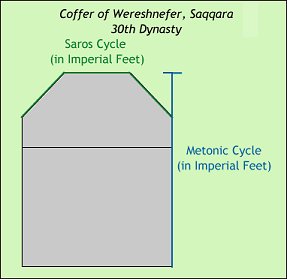




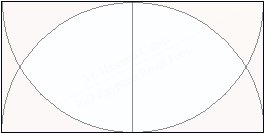
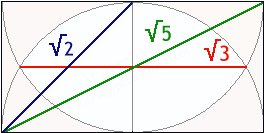
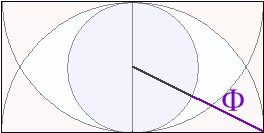
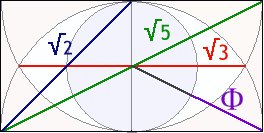



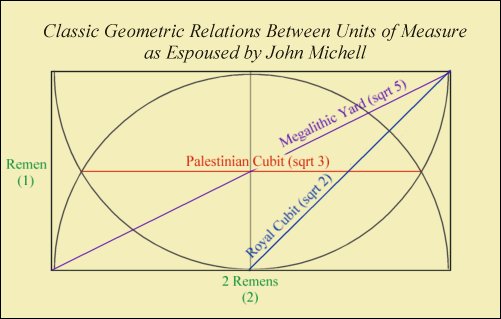


 Luke Piwalker
